
500 kW Rooftop Solar System
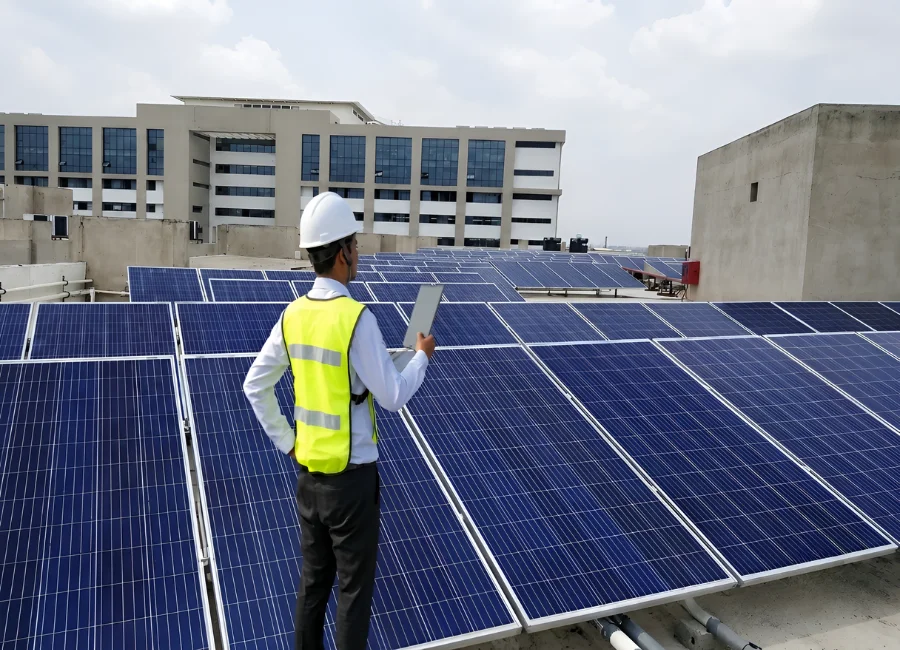
A 500 kW rooftop solar system is a high-capacity renewable energy solution for factories, warehouses, commercial buildings, institutions, and other facilities with substantial electricity consumption. It helps businesses generate clean electricity on-site, reduce grid dependency, and manage long-term energy expenses.
EKA Synergy Solar provides end-to-end solar EPC services, including site assessment, system design, equipment supply, installation, commissioning, monitoring, and maintenance. Our solutions are designed around your electricity consumption, available roof area, operating schedule, and grid requirements.
A properly engineered 500 kW solar power plant can deliver reliable renewable energy for large commercial and industrial facilities while supporting sustainability and long-term energy management goals.
For businesses considering this capacity, the key factors are project cost, expected generation, available rooftop area, electricity consumption, grid connectivity, and expected financial savings.
Who Should Consider a 500 kW Solar System?
A system of this capacity can be suitable for organizations with high daytime electricity consumption.

Commercial Buildings
Office complexes, shopping facilities, hotels, and large business premises can use solar generation to reduce conventional electricity consumption.

Hospitals & Institutions
Large facilities with consistent electricity requirements can utilize renewable power as part of their energy management strategy.

Utilize Available Rooftop Space
Large hospitals and healthcare campuses often have substantial rooftop areas. Suitable shadow-free space can be utilized for solar generation without requiring additional land.

Warehouses & Logistics Facilities
Utilize large rooftop areas to offset electricity used for lighting, material handling, cooling, and warehouse operations.

Large Industrial Rooftops
Businesses with suitable roof structures can convert unused rooftop space into a productive source of clean energy.

Factories & Manufacturing Units
Generate solar electricity for machinery, production equipment, lighting, ventilation, and other industrial loads.
500 kW Solar System Cost
The 500 kW solar system cost depends on several factors, including system configuration, module and inverter selection, mounting structure, roof condition, electrical infrastructure, installation complexity, and grid-connection requirements.
On-Grid Solar System
- Indicative Cost: ₹2.1 – ₹2.8 Crore
- Suitable for businesses with suitable grid connectivity.
Off-Grid Solar System
- Indicative Cost: ₹2.8 – ₹3.5 Crore
- Suitable for sites requiring battery-supported independent power.
Hybrid Solar System
- Indicative Cost: ₹3.2 – ₹3.9 Crore
- Suitable for facilities requiring grid supply with battery backup.
These are indicative ranges and not fixed quotations. Final pricing depends on site conditions, equipment specifications, electrical work, civil requirements, approvals, battery capacity where applicable, and overall project scope. For an accurate project price, a detailed site survey and technical assessment should be completed.
500 kW Solar Plant Generation
A well-designed 500 kWp solar plant can produce substantial electricity throughout the year. The actual output depends on solar irradiation, location, module technology, orientation, shading, inverter efficiency, temperature, system availability, and maintenance. Typical estimated generation may be:
| Generation Period | Estimated Output |
|---|---|
| Daily | 2,000 – 2,500 units |
| Monthly | 60,000 – 75,000 units |
| Annual | 7.2 – 9 lakh units |
These figures are indicative. A location-specific generation simulation provides a more accurate estimate before project execution. Two 500 kW solar plants installed in different locations may not generate the same amount of electricity. Solar irradiation, weather conditions, roof orientation, system losses, and shading can significantly influence actual performance.
500 kW Solar System Technical Specifications
| Specification | Typical Details |
|---|---|
| System Capacity | 500 kWp |
| Module Quantity | Depends on selected module wattage |
| Module Rating | Typically based on selected module technology |
| Inverter | Approximately 500 kW, based on system design |
| Daily Generation | Approximately 2,000–2,500 units |
| Annual Generation | Approximately 7.2–9 lakh units |
| Installation | Rooftop or ground-mounted |
| Panel Life | 25+ years, subject to manufacturer specifications |
The final quantity and inverter configuration should be determined after engineering evaluation. For example, panel quantity can be estimated by dividing the total system capacity by the wattage of the selected module. Higher-wattage modules generally require fewer panels for the same 500 kW capacity.
Benefits of a 500 kW Rooftop Solar System
Support Sustainability Goals
Using renewable electricity can help organizations reduce their dependence on conventional energy sources and support environmental initiatives.
Reliable Solar Generation
High-quality modules, correctly sized inverters, professional installation, and regular maintenance help maintain consistent system performance.
Improve Energy Planning
On-site generation can reduce reliance on purchased electricity and support better long-term energy management.
Suitable for High Energy Consumers
The capacity is appropriate for facilities with substantial electricity demand and sufficient rooftop space.
Improved Energy Management
Generation monitoring can provide useful information about solar production and system performance.
Make Better Use of Rooftop Space
Large industrial and commercial roofs can be converted into productive renewable energy assets.
Reduce Electricity Expenses
Generate electricity at the point of consumption and reduce dependence on conventional grid power.
Roof Area Required for 500 kW Solar System
The required roof area depends on module wattage, panel dimensions, mounting arrangement, orientation, spacing, access pathways, and shading conditions.
For a project of this capacity, the available rooftop should be assessed for:
- Structural strength and load-bearing capacity
- Shadow-free solar exposure
- Roof orientation and usable area
- Module layout and maintenance pathways
- Inverter and electrical equipment placement
- Cable routing
- Earthing and lightning protection
- Safe access for cleaning and maintenance
It is important to calculate usable roof area, not only total roof area. Water tanks, ventilation equipment, skylights, parapet shadows, safety setbacks, and maintenance pathways can reduce the actual space available for solar modules.
A professional structural and technical assessment should be completed before installation.
Components of a 500 kW Rooftop Solar System
Solar electricity can contribute to several areas of hospital operations depending on the system capacity and electrical design.
Transformer & Grid Equipment
Depending on the facility and interconnection requirements, transformers, switchgear, metering, and evacuation equipment may be required.
Monitoring System
A digital monitoring platform can track generation, inverter performance, system availability, and other important operating parameters.
Protection Equipment
Isolators, surge protection devices, circuit protection, earthing, and lightning protection help improve electrical safety.
DC & AC Cables
Properly rated cables transmit electricity safely between modules, inverters, distribution equipment, and the facility.
Mounting Structures
Engineered mounting structures securely position modules while maintaining the required orientation and inclination.
High-Efficiency Solar Modules
Solar modules capture sunlight and convert it into DC electricity for the solar power system.
Solar Inverters
Inverters convert DC electricity into AC power suitable for the facility's electrical network.
Factors Affecting the Price of a 500 kW Solar Project
Several factors determine the final project investment.
Electrical Infrastructure
Transformer capacity, cable length, switchgear, protection equipment, and grid interconnection can change project costs.
Roof Condition
Structural reinforcement, waterproofing requirements, and mounting complexity can affect installation expenses.
Solar Module & Inverter Selection
Technology, efficiency, manufacturer, warranty, and performance specifications influence equipment costs.
System Configuration
On-grid, hybrid, and battery-integrated systems have different equipment and installation requirements.
Civil Work
Ground-mounted projects may require foundations, fencing, drainage, land preparation, and other infrastructure.
Installation Location
Accessibility, height, site conditions, and local labor requirements influence construction costs.
Solar Savings, Payback & ROI
The financial performance of a large solar installation depends on actual electricity consumption, tariff, solar generation, project cost, financing structure, O&M expenses, and applicable regulatory arrangements. A project financial model can evaluate:
- Exported electricity, where applicable
- Long-term return on investment
- Self-consumption percentage
- Electricity bill reduction
- Initial project investment
- Annual operating expenses
- Annual solar generation
- Financing costs
- Payback period
Instead of using a fixed ROI figure for every project, EKA Synergy Solar evaluates the actual site and consumption profile to provide a more realistic financial projection. For a more reliable estimate, businesses should provide recent electricity bills, operating hours, sanctioned load or contract demand, tariff details, and available roof information.
Why Choose EKA Synergy Solar for 500 kW Solar Plant Installation?
Complete EPC Support
From initial assessment and engineering to procurement, installation, commissioning, and maintenance, our team supports the complete project lifecycle.
Professional Installation
Our installation approach focuses on secure mounting, proper wiring, earthing, protection, cable management, and safe project execution.
Customized System Design
We design solar projects according to your electricity consumption, available rooftop space, operating pattern, and technical requirements.
Quality Equipment
We select suitable solar modules, inverters, mounting systems, electrical components, and safety equipment based on project requirements.
Transparent Project Planning
We provide clear information about system capacity, equipment requirements, project scope, expected generation, and estimated investment.
Ongoing Maintenance Support
Regular monitoring, cleaning, inspection, troubleshooting, and AMC services can help maintain long-term plant performance.
Frequently Asked Questions About 500 kW Solar Systems
1. How much electricity does a 500 kW solar system generate per day?
A properly designed project may generate around 2,000–2,500 units per day under suitable conditions. Actual production varies according to location, weather, system design, shading, temperature, and operating conditions.
2. How many solar panels are needed for 500 kW?
The number of panels depends on the wattage and technology of the selected modules. Higher-wattage modules generally require fewer panels for the same capacity.
For example, the basic calculation is:
500,000 watts ÷ selected module wattage = approximate panel quantity.
The final quantity should be determined through system engineering.
3. How much roof space is required?
The required area depends on module dimensions, layout, spacing, orientation, maintenance pathways, safety clearances, and shading. A site survey is necessary to determine the usable area accurately.
4. Can a 500 kW system be installed on a factory roof?
Yes. A factory rooftop can be suitable if it has adequate structural strength, sufficient usable area, suitable solar exposure, and appropriate electrical infrastructure.
5. What is the price of a 500 kW solar system?
The price depends on system configuration, equipment, installation conditions, electrical infrastructure, civil work, and project requirements. A final quotation requires a technical site assessment.
6. Does a 500 kW solar plant require batteries?
No. Batteries are not required for a standard on-grid configuration. Storage can be added when backup or energy-management requirements justify the additional investment.
7. How long do solar panels last?
Solar panels are designed for long-term operation, with many manufacturers providing performance warranties of 25 years or more. Actual performance depends on product quality, installation, environment, and maintenance.
8. What maintenance is required?
Routine maintenance generally includes module cleaning, electrical inspection, inverter checks, performance monitoring, preventive maintenance, and periodic safety checks.
9. Can solar power reduce a factory's electricity bill?
Yes. When solar generation is consumed by the facility, it can reduce the amount of electricity purchased from the grid. The actual savings depend on consumption, tariff, generation, and applicable metering arrangements.
10. Is a 500 kW rooftop project suitable for every business?
Not necessarily. Suitability depends on electricity consumption, available roof area, structural strength, solar exposure, electrical infrastructure, and applicable grid requirements.